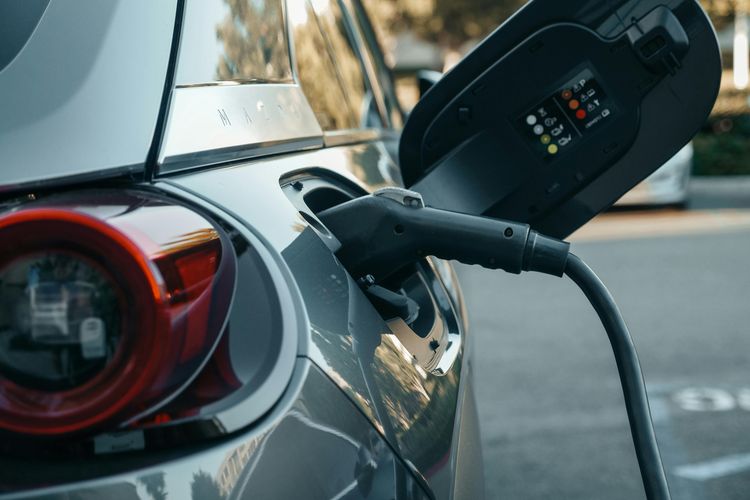
JAKARTA, The Shiro Corp Entering the second semester of 2025, the influx of electric vehicles from China into Indonesia is increasingly intense, carrying a strategy of low prices even though the products are still entirely imported ( completely built-up /CBU).
In the midst of this situation, national automotive component issuer PT Dharma Polimetal Tbk (DRMA) requested the government to be stricter in implementing several regulations such as Domestic Component Level (TKDN).
DRMA's President Director, Irianto Santoso, considers the TKDN policy as an important instrument to maintain the balance between the growth of the automotive industry and the protection of local labor-intensive component industries. "For example, after two years, TKDN should reach 40 percent. The incentives (import duty exemptions) will end in 2025. Therefore, starting from 2026, it should be mandatory to have 40 percent TKDN, then 60 percent the following year. It just depends on how it is implemented," said Irianto when he was met at ICE BSD, Tangerang, recently.
Meanwhile, DRMA Director Darmawan Widjaja also assessed that the automotive industry has a long and extensive supply chain.
Therefore, every policy targeting this sector is believed to have a significant domino effect on the economy. "If the government can provide stimulus like during the Covid time, it will have a big impact. This automotive industry has a long supply chain, from upstream to downstream, including component suppliers," said Darmawan.
She added that the increase in car sales is not only beneficial for vehicle manufacturers, but will also revitalize its supporting industrial ecosystem, ranging from parts suppliers, small and medium enterprises (SMEs), to the logistics and distribution sectors. "I think the automotive industry is one of the manufacturing sectors with a very long supply chain. If it is stimulated at the end, the impact can reach down," he said.
It is known, according to Gaikindo data, national car sales throughout the first half of 2025 are still sluggish, where the total Wholesales or from the factory to the dealer decreased by 8.6 percent, reaching 374,740 units annually.
Of that amount, battery-powered electric vehicles ( battery electric vehicle /BEV) recorded 36,611 units or controlling a market share of 9.77 percent.
Although its growth has been rapid in the last four years, this surge is not yet sufficient to drive an overall increase in automotive market volume.
It means that new brands and models coming in only erode the existing market.
Comments
Post a Comment