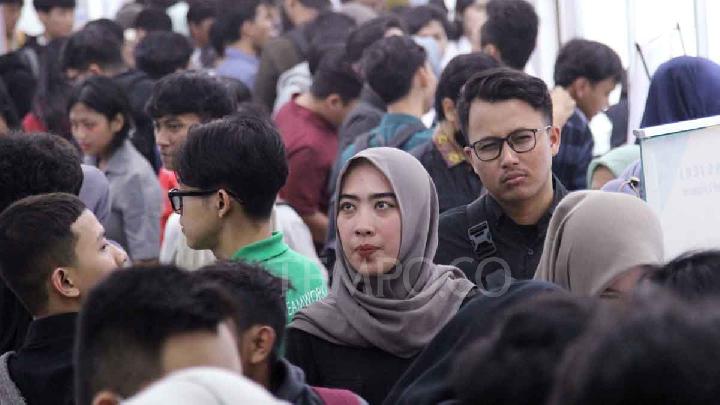
The Shiro Copr , Jakarta - Speaker of the People's Representative Council (DPR) Puan Maharani highlighted the figures unemployment Graduates who reached 1,010,652 people this year. This figure is considered to indicate the weakness of the education system, labor policy, and the structural direction of national economic development.
" This indicates that our system, both education and the job market, is not yet connected to the real needs of the business and industry world," he said in a written statement on Thursday, July 17, 2025.
The woman assessed the phenomenon of graduate unemployment as a portrait of stagnation in national human development planning. If not addressed soon, she said, Bonus demographics Indonesia may even turn into a social and economic burden in the near future.
The Ministry of Manpower previously revealed that the number of unemployed people in Indonesia reached 7.28 million as of February 2025. Of this number, there were 1.01 million university graduates. According to data from the Central Statistics Agency (BPS), the unemployment rate in February reached 4.76 percent of the Indonesian labor force.
Based on their educational background, the largest number of unemployed people come from elementary school (SD) and junior high school (SMP) education, totaling 2.42 million people. In second place are high school (SMA) graduates, with 2.04 million people. Next are unemployed individuals from the final level of vocational high school (SMK), totaling 1.63 million people. Then there are also 1.01 million university graduates, followed by 177,39 thousand diploma holders.
Puan does not want this situation to continue for too long, and therefore urges the government to take quick and bold corrective measures. "Encouraging the government to evaluate the higher education and vocational high school system, so that it becomes more relevant to the labor market's needs in the next five to ten years," said Puan.
This member of the Indonesian Democratic Party of Struggle (PDIP) stated that universities and vocational high schools should be part of the national productive ecosystem, not just factories producing academic degrees. He suggested that the central government should also participate in establishing national skill development centers in various regions. These facilities are intended for retraining and further training needs.
Kita need an industry-based training center that is responsive to the needs of the times," he said. "From digital technology, modern agriculture, logistics, to renewable energy.
Other inputs regarding policies in the productive sector and job investment should focus on labor-intensive industries with added value, green sectors, and the digital economy. Fiscal regulations and incentives, according to Puan, should create more formal jobs, not just grow the informal sector.
He encourages the government to build platform Integrated digital system across ministries to dynamically map sectoral labor needs. This service must at least involve the Ministry of Manpower, the National Development Planning Agency, the Ministry of Elementary and Secondary Education, the Ministry of Higher Education, Science and Technology, the Ministry of Industry, and the Investment Coordinating Board.
"Until the ministry and institutions continue to work within their respective sectors, the issue of unemployment will never be resolved," said Puan.
Comments
Post a Comment