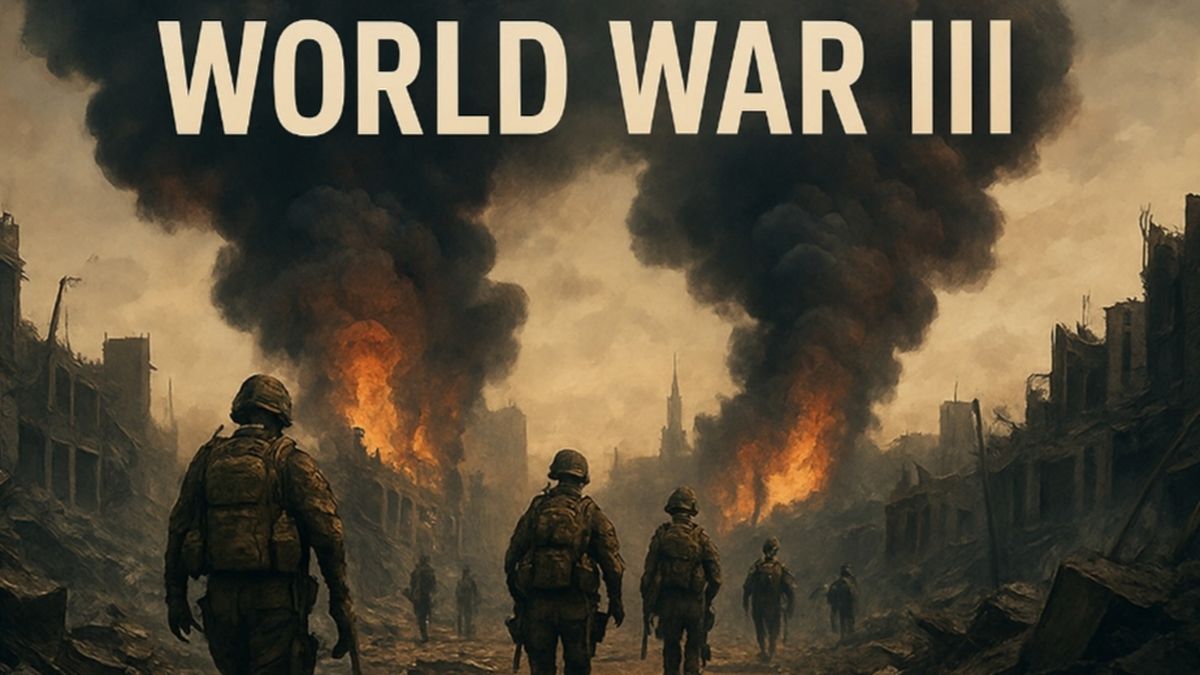
JABAR PR – Large-scale military attacks have resumed in the Middle East after the Supreme Leader of Iran, Ayatollah Ali Khamenei, declared that "the battle has begun" through a post on the X platform. This statement marks a firm response from Iran to threats made by the President of the United States against him, as well as a strong signal of escalating conflict with Israel.
IRGC Emphasizes Target of Attack is an Israeli Airbase
The Islamic Revolutionary Guard Corps (IRGC) of Iran officially declared that they have launched a series of missile and drone attacks on several strategic Israeli air bases. The main targets of this operation are military facilities that have been used to attack Iranian territory.
The latest attack is not the first. Iran is reported to have carried out up to ten waves of attacks since tensions escalated in recent days. Missiles and drones were fired from various regions of Iran towards Israeli military targets, triggering air raid sirens in several major cities including Tel Aviv and Jerusalem.
Iran's Missile Hits Israel's Defense
Although Israel's air defense system successfully intercepted most of the incoming projectiles, reports from the field indicate that several missiles managed to break through and caused damage in some strategic areas. There have been no official reports yet regarding the number of casualties or the extent of infrastructure damage, but panic and tension have sharply increased within Israel.
Visual monitoring shows missiles streaking across the sky over Israel, with most appearing to head towards densely populated central areas. The Israeli military authorities continue to enforce strict censorship regarding the locations directly affected by the attack.
World's Concern over the Potential for Large-Scale War
This situation is increasingly raising concerns within the international community. Geopolitical analysts believe that Iran's attack was a planned retaliation and demonstrates an increase in Iran's strategic military capabilities. It is also seen as an attempt to show strength amid increasing international pressure.
On the other hand, this tension has sparked concerns about the possibility of a multinational conflict involving major world countries, including the United States, which is Israel's main ally. Countries in the Gulf region have also begun to increase their military preparedness as a precaution against the conflict spreading across borders.
Warning from Former IAEA Chief
Former Director of the International Atomic Energy Agency (IAEA), Mohamed el-Baradei, issued a strong warning about this potential escalation. He stated that an Israeli attack on Iran's nuclear facilities could be a serious violation of international law and could encourage other countries to build nuclear weapons as a defense measure.
According to him, if the Nuclear Non-Proliferation Treaty continues to be ignored, then the world will face a new era of an arms race that is far more dangerous and uncontrollable. Baradei also emphasized the importance of the role of the UN Security Council in easing tensions before they erupt into an open war involving many countries.
Impact on Regional Stability
Meanwhile, within Iran, Ayatollah Khamenei's statement triggered a strong wave of national support for military action. Media outlets and religious figures called for solidarity in the struggle to defend national sovereignty. Several major cities reported holding sympathy rallies and joint prayers for those on the front lines.
On the Israeli side, the government is holding an emergency meeting to evaluate the national security situation. Communication channels with allied countries are also being intensively opened to ensure comprehensive defense coordination. Civilians are asked to remain vigilant and follow instructions from the military.
Comments
Post a Comment